On land, a failed transformer means a truck and a spare part. Offshore, the same failure means a helicopter, a weather window and a production loss counted in hours of downtime at full rate. This is why predictive maintenance is not an option at sea — it is the only economically rational strategy.
Why a failure at sea costs differently
Three factors change the economics of every fault on a platform, an FPSO or a vessel under way:
- Logistics: spares and specialists do not arrive in an hour. Mobilisation depends on sea state, helicopter availability and permits.
- Isolation: there is no second supplier next door. What is on board is what you have.
- Consequence: a fire or a blackout in a confined environment, far from shore, is a scenario with an entirely different severity from the same event in a factory.
Infrared inspection reverses the order of events: the anomaly is found while the plant is running, and the repair is planned for a scheduled shutdown rather than improvised in an emergency.
What we survey on a platform
- main and secondary switchboards, MCCs and distribution panels;
- HV/LV power transformers and busbar trunking;
- generator sets and their excitation and control circuits;
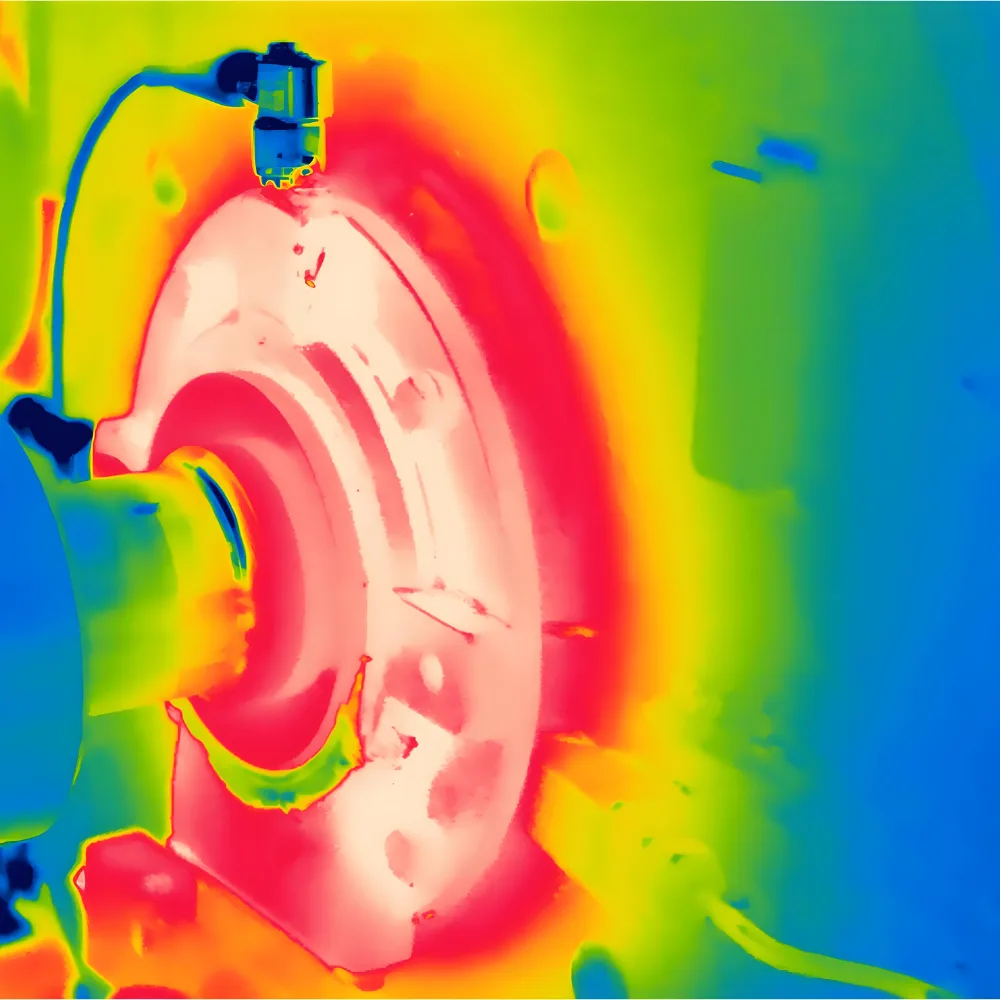
- electric motors, pumps and compressors: bearings, couplings, misalignment;
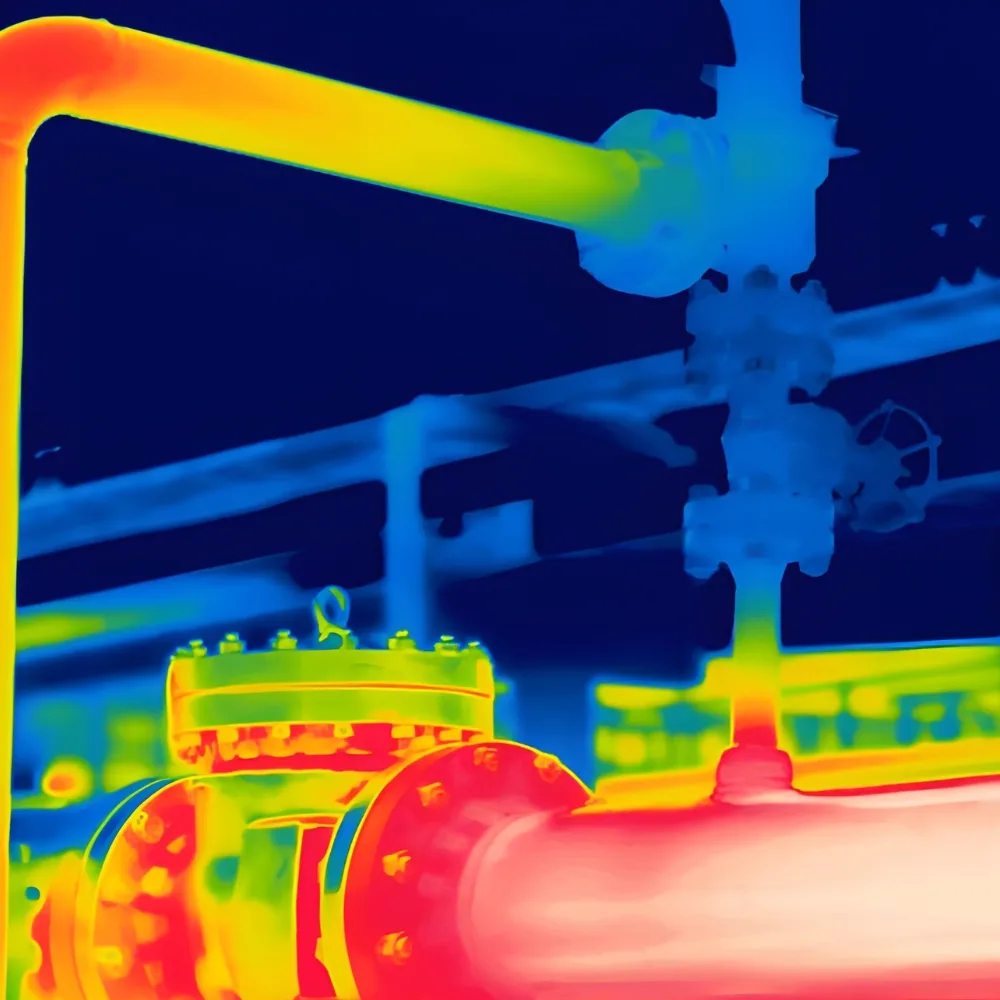
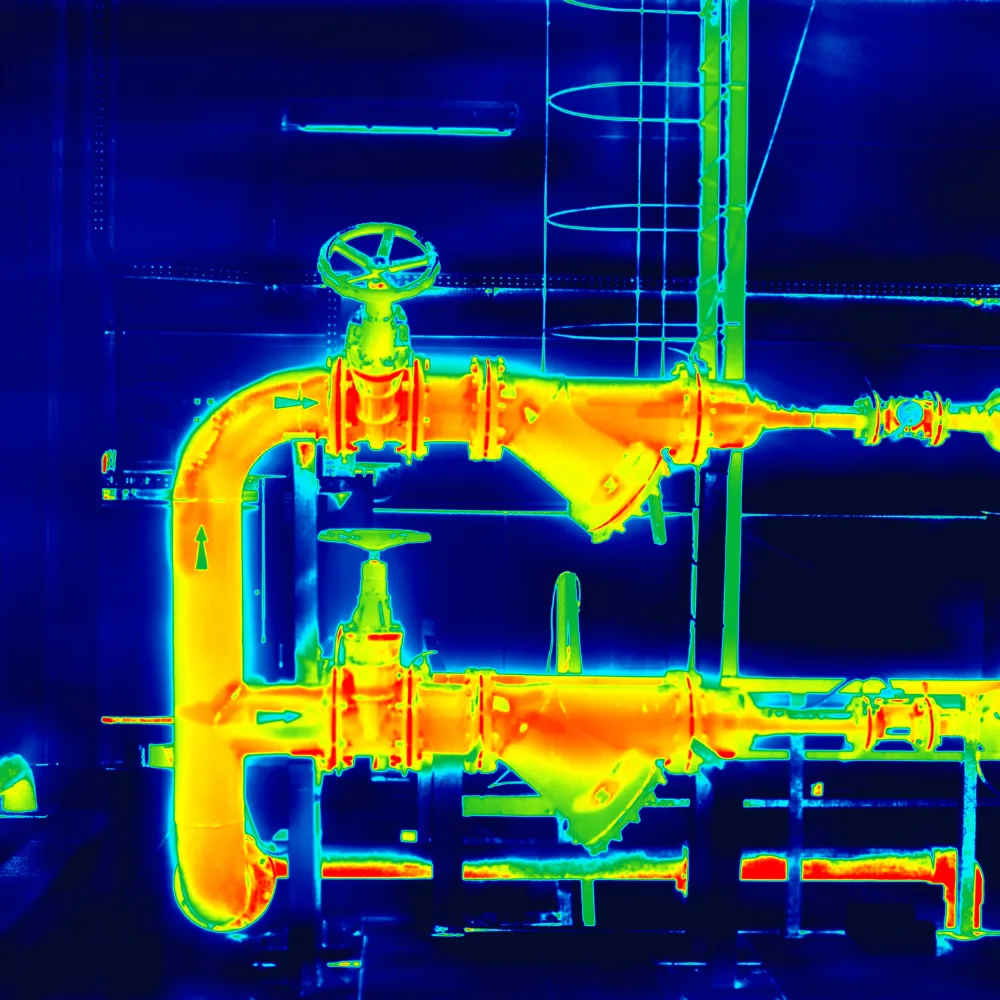
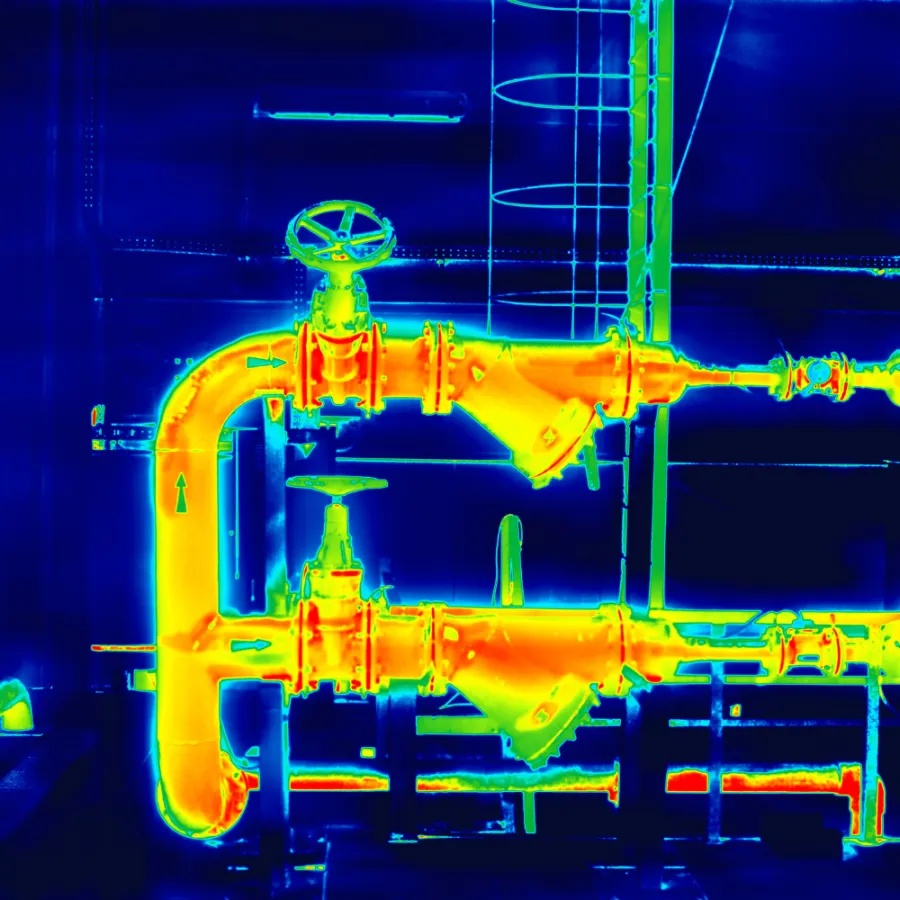
- heat exchangers, steam traps and insulation on process lines;
- refractory linings, vessel and tank levels, scaling and restrictions in piping.
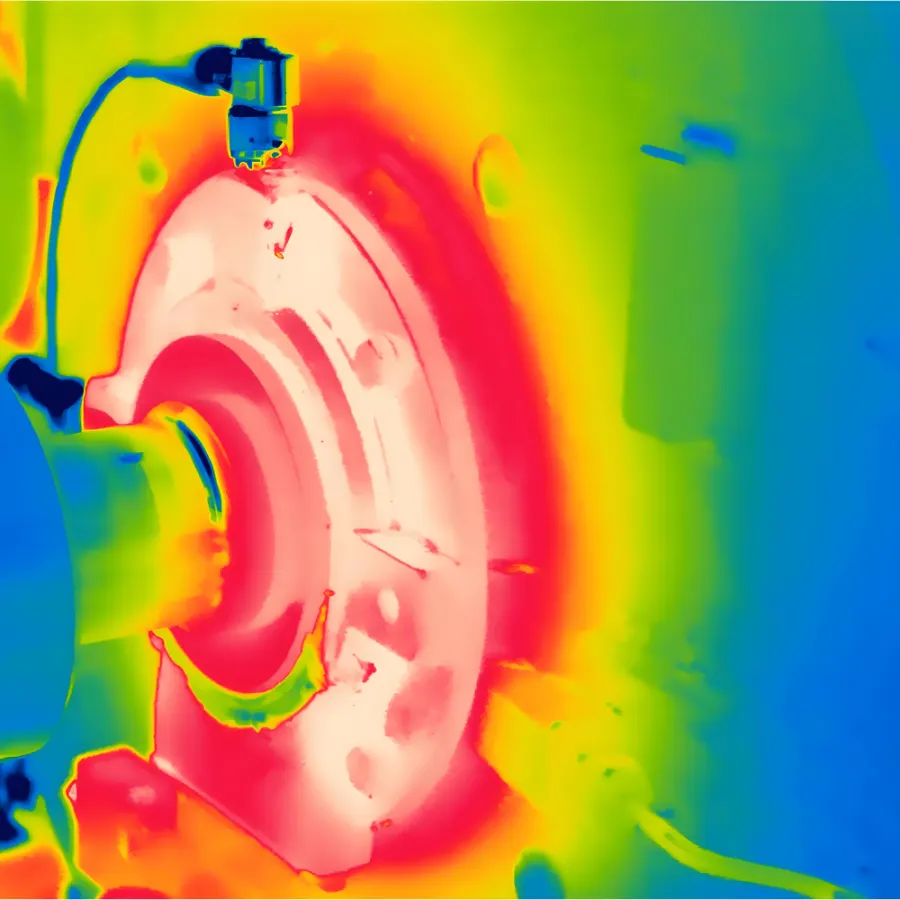
On board: the engine room and propulsion
On merchant and passenger ships the priority is fire risk in confined spaces. The infrared survey is carried out with the vessel under way, on propulsion switchboards, generators, main and emergency panels, cable runs and exhaust manifolds. Finding a loose terminal before it becomes an ignition source, in a machinery space at sea, is worth more than any spare part.
The operational constraints nobody mentions in a brochure
Working offshore means accepting a discipline that has nothing to do with the camera:
- permit-to-work systems and toolbox talks integrated with the client's procedures;
- classified (ATEX) areas, where the instrument itself must be compatible with the zone;
- weather windows that can shorten a campaign from one hour to the next;
- personnel with valid survival, medical and safety certification — without it, you simply do not board.
Offshore, competence is measured before departure: an operator who cannot embark is an operator who does not exist.
We have been working in oil & gas and offshore since 2020, with Level 2 certified operators. Read what certifications the job requires in Ready to board, or see our inspection services.