Services
We provide thermographic inspection services to ensure the safety and efficiency of industrial plants in the oil & gas and offshore sector.
 Efficiency and safety
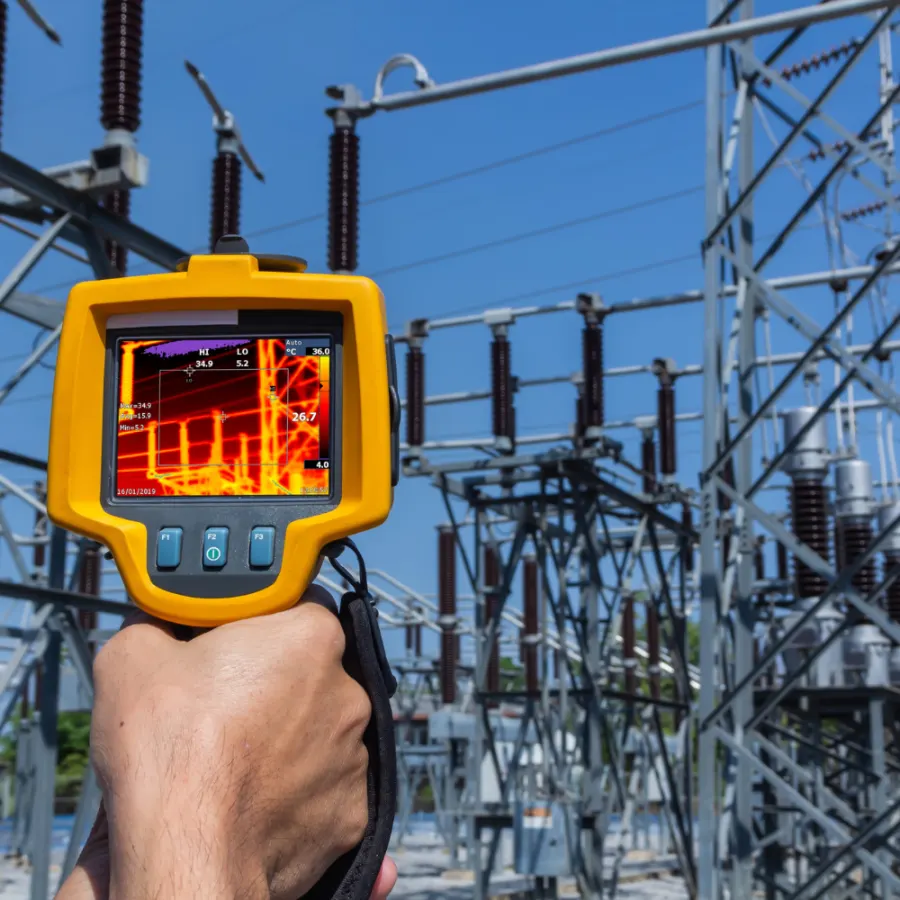
We see anomalies before the failure
We use state-of-the-art technology to identify thermal anomalies in electrical and mechanical systems, preventing failures and improving operational safety. Our certified experts deliver solutions tailored to every requirement.
- Inspections performed with the plant in operation, no production downtime
- High-resolution instrumentation with thermal sensitivity < 30 mK
- Reporting compliant with ISO 18436-7 / ISO 9712 criteria
Electrical switchboards and transformers
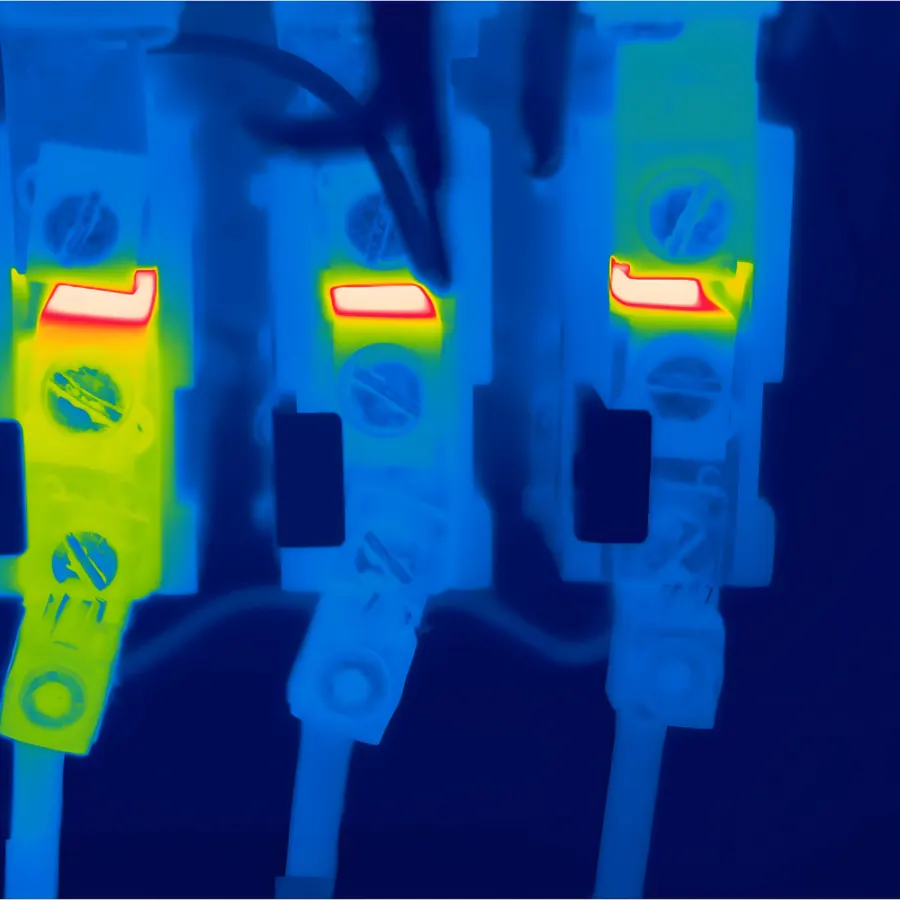
Thermal scanning to detect overheating in electrical switchboards, preventing fires and ensuring operational continuity.
- Electrical substations and medium-voltage substation rooms (MV/LV)
- MV and LV switchboards, transformer rooms
- Disconnectors, circuit breakers, terminal blocks and joints
- Power transformers: bushings, radiators, connections
- Overhead power lines: conductors, clamps and insulators
- Load imbalances and loose or oxidized connections
- Field combiner boxes and photovoltaic strings
A faulty connection can exceed 100 °C while everything around it stays at ambient temperature: it is the most frequent trigger of fires and arc flash events. Each anomaly is classified by ΔT and criticality.
Bearings and motors
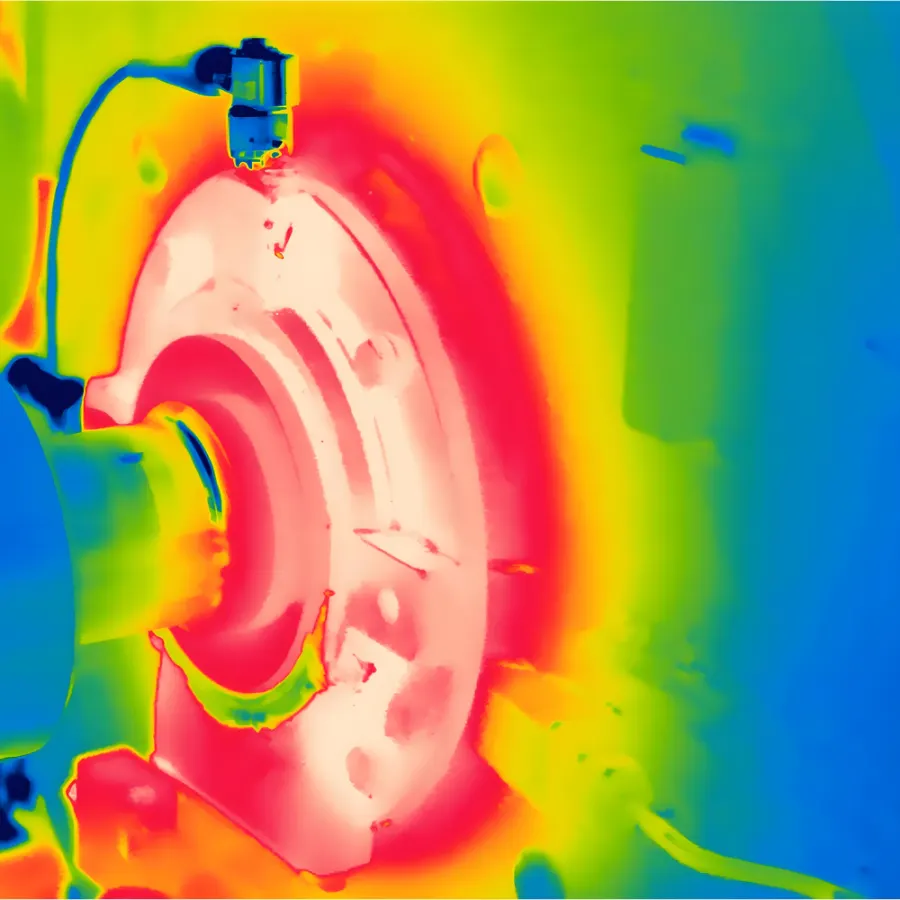
Thermographic monitoring of bearings and motors to prevent mechanical failures, reducing plant downtime.
- Electric motors, pumps, fans and gearboxes
- Bearings, housings and couplings
- Belts, joints and misalignment
- Abnormal friction and insufficient lubrication
- Furnaces, boilers and refractory linings
Friction produces heat long before noise: periodic monitoring makes it possible to schedule component replacement instead of suffering an unexpected line shutdown.
Energy and heat losses
Identification of heat losses to improve energy efficiency and reduce plant operating costs.
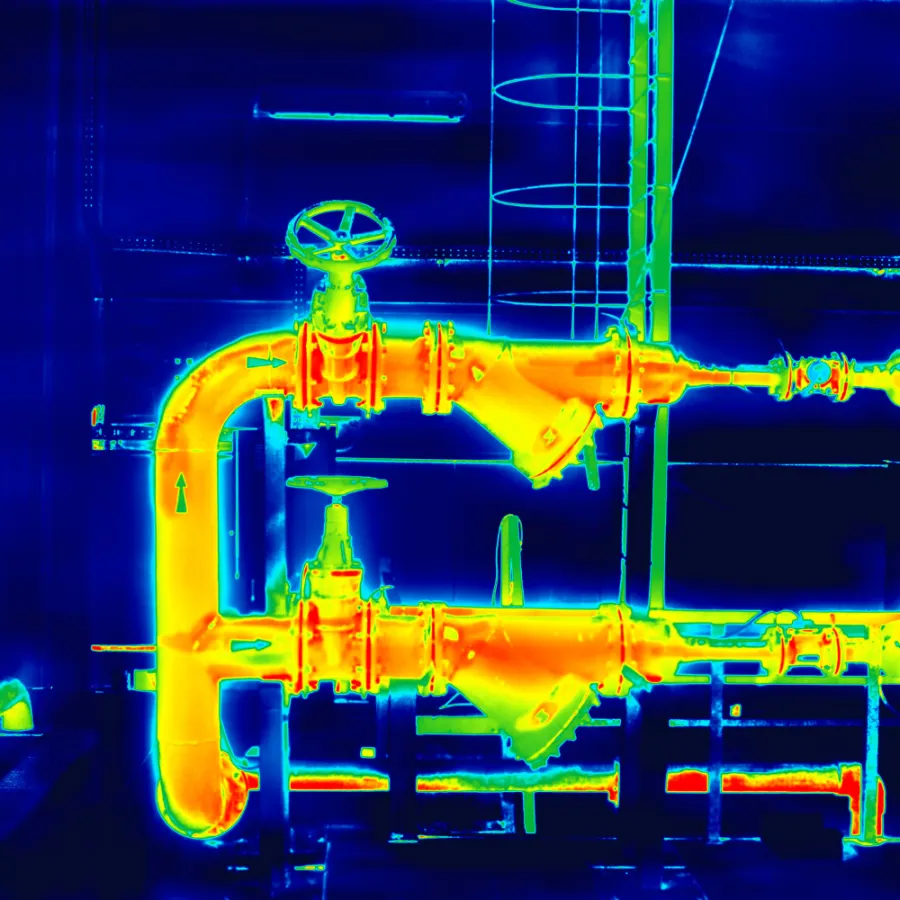
- Damaged insulation and thermal bridges
- Steam networks, steam traps and valves
- Blocked piping and tank levels
- Building envelope of industrial facilities
Locating heat losses and inefficiencies contributes to measurable energy savings and greater plant sustainability.
 Optical Gas Imaging
OGI cameras
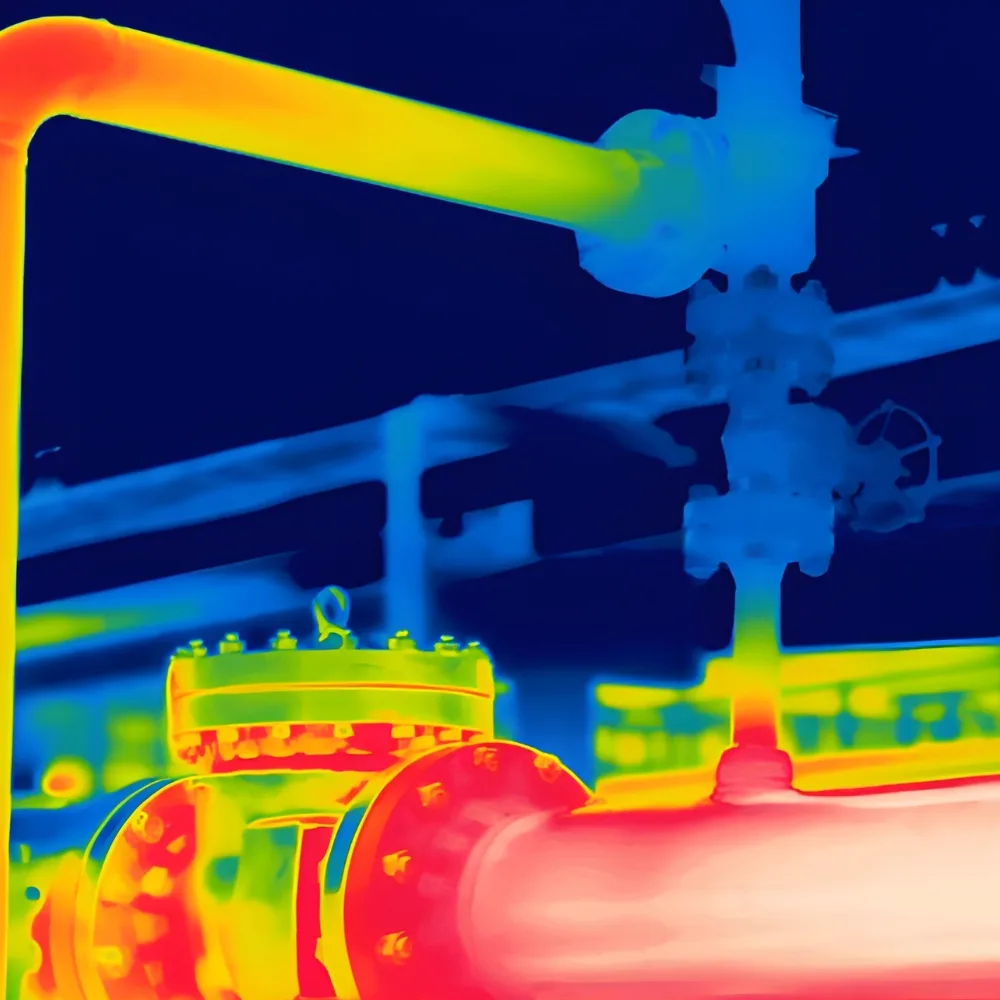
OGI cameras (Optical Gas Imaging) make methane, sulfur hexafluoride (SF₆) and volatile organic compounds visible: the gas appears as a moving cloud in the video, even at low concentrations and from a safe distance.
- LDAR inspections on wellheads, manifolds, compressors and flanges
- SF₆ monitoring on circuit breakers and GIS systems
- VOC emission monitoring in petrochemical plants
- Pipelines, compressor stations, storage tanks and flares
Predictive maintenance
Not a single inspection but a program: periodic campaigns, thermogram archiving, and comparison of the same measurement points over time.
Book an on-site survey
Request a free assessment of your thermography needs: we analyze the plant and define the inspection plan together.